
01
Strategy & architecture
Decide where AI belongs, redesign the work before automating it, and map the models, data, tools, permissions, and costs required to build it well.
Assemble the system
Groundwork makes AI useful where the business actually needs it: the right use cases, the gaps in process and data, the trained people, and the connected systems that give AI something solid to stand on.
The gap
Getting AI is easy now. Applying it is the hard part. Someone has to decide what it should do, where it runs, who signs off on it, and how it fits the work your team already does.
Skip that, and you pay for activity, not results. Tools stack up, time goes in, and the output still isn’t worth what it costs.
How we apply it
Map the real process first: where AI helps, where it gets in the way, and the permissions, data access, and security boundaries it has to respect.
Not every problem needs an LLM. Choose each component deliberately, never by default.
Build with the people who will use it. The goal is not just a working system. It is shared knowledge, trust, and habits that last.
Hand over the tool, the runbook, and the decision rules. The system is yours, and it is not done until your team can run it without us.
The model is only one part.
Human Control
Human control surrounds the system.
What we build
Decide where AI belongs, redesign the work before automating it, and map the models, data, tools, permissions, and costs required to build it well.
Build working AI systems around the real workflow: agents, dashboards, internal apps, automations, routing tools, and approval gates that your team can actually run.
Connect AI to the knowledge and tools your business already depends on: structured memory, databases, search, APIs, MCP, CLIs, and existing applications.
So the system works from your context and can act inside your real environment.
Train your team to run what we build and get more from the tools already in place. Workshops, hands-on practice, operating rules, and ongoing adoption support.
Field Notes
Four real projects at different stages of development. Identifying details removed.
Proof of: Custom systems
Proof of: Knowledge & integration · Custom systems
Proof of: Training & adoption
Proof of: Strategy & architecture
Source note: some examples draw from UW System Small Business AI Center work, independent builds, and continued client work.
Ways to Work
Most engagements combine all three. The balance changes with the project.
Who
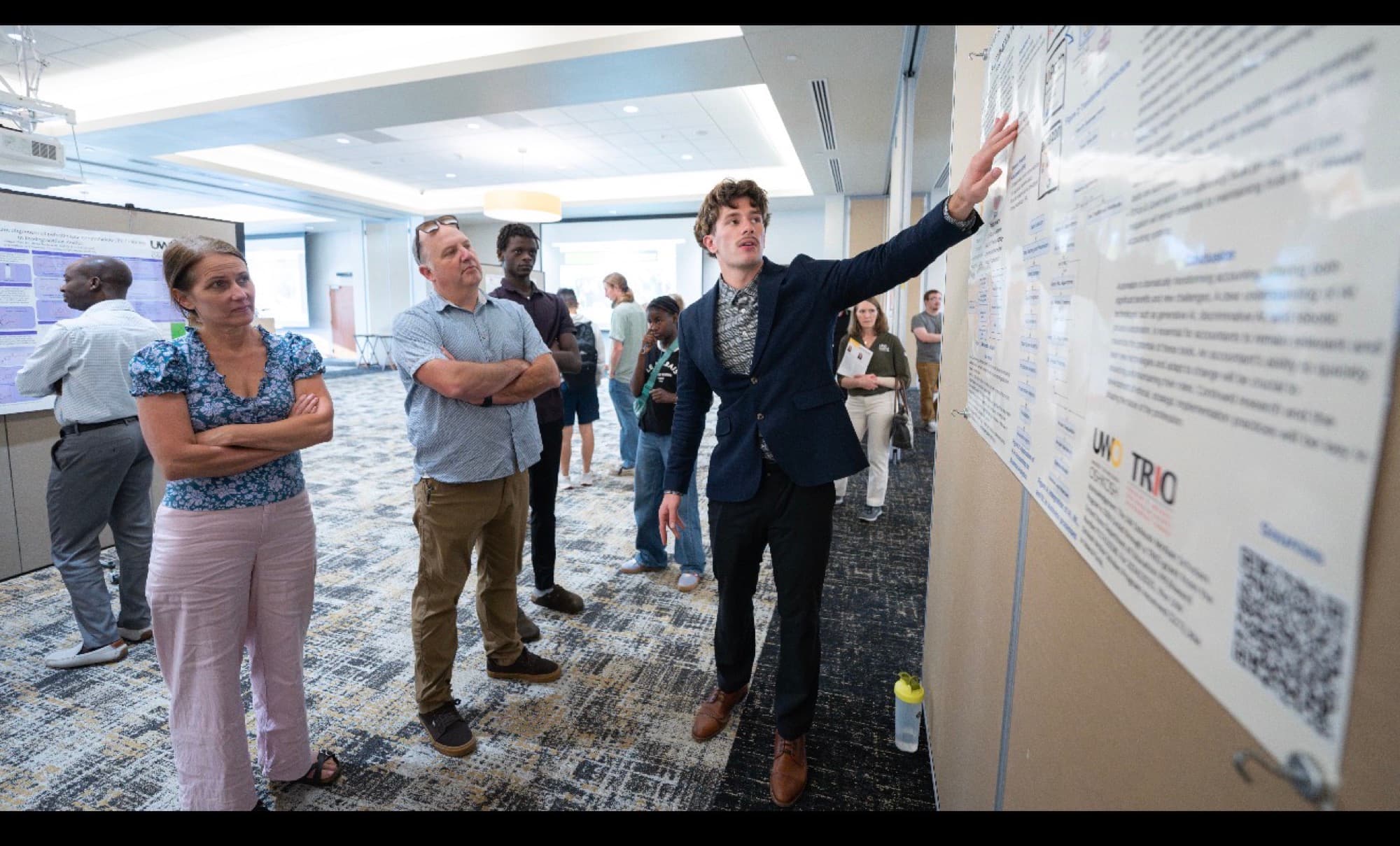
I work at the intersection of business operations, accounting, and information systems, building AI systems that make sense in the way people actually work.
I work directly with the people who will use what we build. That means learning the real workflow, making the hard decisions together, and training the team to understand the system, not just operate it, so it earns trust instead of being handed over and forgotten.
Connect on LinkedInB.B.A. Accounting + Information Systems
Founding intern, UW System Small Business AI Center
McNair Scholar
Free
A skill is a standing instruction: you write down how you want the work done, once, and the AI reads it before it starts. These eight are a place to begin.
Next step
The hardest part is starting. We make that part easy. Bring a thought, a problem, or a half-formed idea. If you already have workflows, tools, or plans, bring those too.
The one-hour discovery call is free and is a simple way to get started.
Free · 60 minutes · No preparation required
AI built on solid ground.
